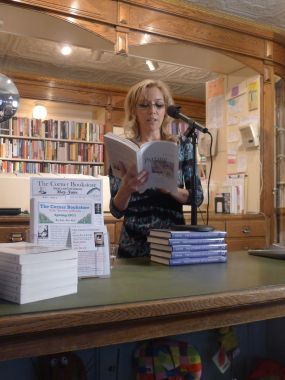
Denise Carson, M.S., is an award-winning author of the narrative non-fiction book, Parting Ways, and expert in new end-of-life care practices that empower and celebrate people. She earned a master of science degree from Columbia University Graduate School of Journalism in New York. As a journalist for two decades, she has interviewed hundreds of people for the Los Angeles Times, Orange County Register and prestigious medical institutions including University of California, Los Angeles. She harnesses the power of story to immerse audiences into the intimate lives of people, subcultures and innovators on the crest of altering the course of our human existence. From the operating rooms on the frontlines of health care to the bedrooms of people passing on their life wisdom, Carson spent thousands of hours capturing the stories of patients, families, physicians and scientific researchers in neuroscience, neurosurgery, neurology, oncology, pain management, palliative care and hospice. She translates and humanizes clinical research for lay-people to use in their daily lives. Carson is sought out by the media for her expertise on end of life and grief, in the New York Times, Kiplinger, HBO and other media outlets.
HBO modeled her book, Parting Ways, in the documentary, “Alternate Endings: Six New Ways to Die in America.” Parting Ways explores solving total pain, encompassing social, spiritual, physical and emotional suffering, through life review interview, living wakes, home funerals, last wish celebrations and green burials that reinvent role of the patient, family, home and community in 21st Century America. She transformed the book research into pioneering practices in hospice and palliative care awarded by the California Hospice and Palliative Care Association. The book inspired a column, Parting Ways, in the Orange County Register and blog, Our Life Celebrations. The column and blog feature patients, families and communities rewriting how we live in life’s last chapter. She has worked with patients, families, hospice caregivers and communities to introduce new end-of-life care practices that invite acceptance, familial healing and celebration to a traditionally alienated stage of life. Carson collaborated with Jay Gianukos, an award-winning life story documentary filmmaker, to grow the life review video program for patients to preserve their life stories for their children and families at Hospice Care of the West. She created and led Celebration a bi-monthly gathering with living eulogies that united the hospice care nurses, palliative care physicians, spiritual care coordinators, home health aides and hospice volunteers. Celebration sparked a culture and community that revived and inspired the hospice team to provide exceptional patient care, which in turn grew the hospice.
Carson is currently using life review interview with patients in collaboration with Dr. Gina Calderone, DPT, physical therapist turned body detective and founder of Centripetal Force Studio, to investigate and heal generational trauma in the body at the root of chronic pain, depression and anxiety, addiction, attention deficit hyperactivity disorder (ADHD), suicidality, and cancer. Carson and Calderone are researching a narrative non-fiction book entitled Invisible Wounds.
About Denise
The summer of 1999, I was working in Paris, France when my mother told me about the terminal cancer. The same disease that had taken my father’s life was on move in her body. I knew well how this story ended. We argued about my return. She wanted me to stay. I wanted to go home. I insisted. Then she paused, in her resolute British accent, she said,
“If you come home, I want you to interview me on our down time together…you can write my life story.”
Her request turned out to be the seed to my book Parting Ways. She revealed herself to me in our interviews. She shared her innermost fears, regrets, last wishes and her hopes and dreams for me. My mother trusted me to care for her and entrusted me to tell her story.
That gift of intimacy given in the last months, days and hours of her life helped me to gain a greater understanding of the fragility and force of people’s needs, wants and desires at the end of life. I used that bestowed wisdom and personal knowledge to guide me in discovering a new way to accompany loved ones on this journey to the last breath. After losing my mother, I took a year out to backpack around the world and learn about other people, cultures and religions. And in many ways, the traveling helped me to contextualize our experiences as Americans living and dying in such a culturally porous country where cultural rituals are borrowed and personalized. I believe these personal experiences invited me into the lives and living rooms of families in their most intimate and vulnerable stages of life. I traveled from the East to West coasts to report what I discovered to be an “End-of-Life Revolution” happening all across America. Below is a video montage that Jay Gianukos, documentary filmmaker, created for my book release celebration that introduces my family and families in Parting Ways. They will be forever remembered.
 Denise Carson